of participants in one 90-day, 40-person study were satisfied with color match and coverage.
International Journal of Trichology, 2022THE HAIR FIBER GUIDE + SHOP
Hair fibers,
understood.
Fiber.Hair is a focused resource for people exploring cosmetic hair fibers: what they are, how they work, where they work best, how to choose a shade, what research actually supports, and which products are worth considering.

Start with the hair, not the hype.Texture, shade, density and placement all affect how believable cosmetic coverage looks.
START HERE
Four questions almost everyone asks first.
01
What are hair fibers?
Understand the cosmetic effect, the materials commonly used, and why existing strands matter.
Learn the basics →02Does the science support them?
See what published dermatology research actually found — including the limitations.
Read the evidence →03How do you make them look natural?
Application technique matters. Less product, better placement and a softer hairline usually win.
Application guide →04How do you choose a shade?
Start with the color at your roots and judge it in daylight, not against lighter ends.
Shade guide →THE RESEARCH
Yes, there is published evidence — for camouflage.
Clinical research supports hair fibers as a temporary way to make thinning areas appear fuller. It does not show that fibers regrow hair or treat the underlying cause of hair loss.
Explore the sciencewas the reported application time for 87.5% of participants in the same study.
International Journal of Trichology, 2022fiber products in a 2017 microscopy study produced successful immediate cosmetic effects, despite different fiber materials.
International Journal of Trichology, 2017These are small studies, not large randomized trials. We present them as evidence for cosmetic performance and user experience — not proof of hair-loss treatment.
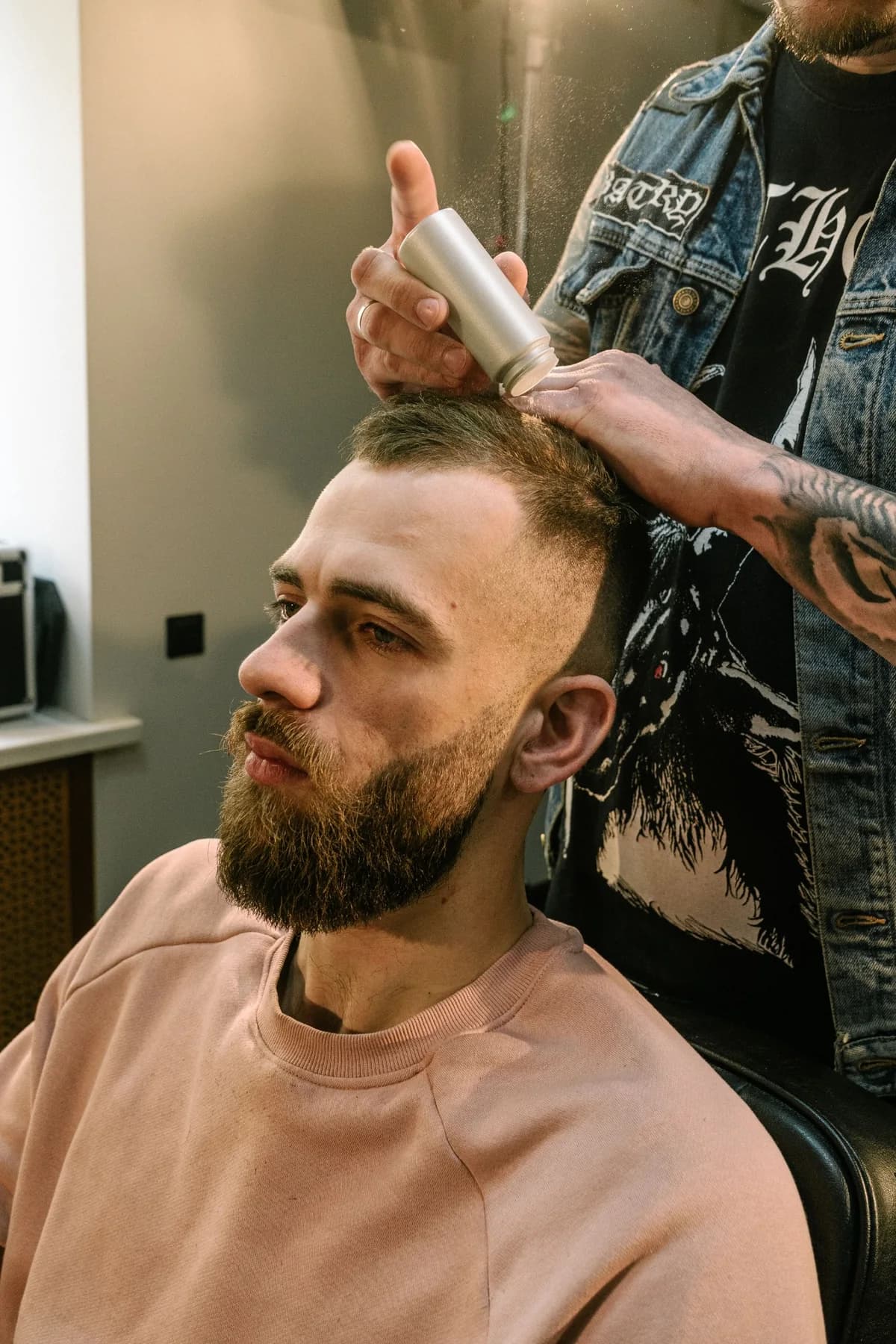
HOW HAIR FIBERS WORK
They make existing hair look denser.
Fine colored fibers settle onto and around existing strands, reducing the visual contrast between hair and scalp. Some keratin products carry an electrostatic charge that helps them adhere to hair.
That explains both the strength and the limitation: fibers can work very well in areas of reduced density, but they have little to attach to on completely smooth bald skin.
See the complete explainer →EXPLORE FIBER.HAIR
One subject. Every useful angle.
Crown thinning
Where fibers tend to have plenty of existing hair to work with.
Receding hairlines
What fibers can realistically do at the front edge — and what they cannot.
Hair fibers for men
Crown, part and frontal-density techniques without over-building the hairline.
Hair fibers for women
Using fibers around widening parts and diffuse thinning.
Fibers vs. hairline powder
Two camouflage formats, different strengths and different use cases.
Research library
Peer-reviewed studies, what they found and where the evidence is still thin.
LATEST GUIDES
Go deeper before you buy.
Technique, shade matching, use cases, comparisons and evidence — written to answer the questions people actually have about hair fibers.
7 min read
Do Hair Fibers Work? What the Research Actually Says
A plain-language look at clinical studies on cosmetic hair fibers, including satisfaction, adhesion, safety and the limits of the evidence.
Read guide →5 min readWhat Are Hair Fibers and How Do They Work?
A straightforward guide to cosmetic hair-building fibers, who they suit, and what results to expect.
Read guide →5 min readHow to Apply Hair Fibers Without Making Them Look Fake
Use less product, build coverage gradually, and protect the hairline for a more natural result.
Read guide →4 min readHow to Choose the Right Hair Fiber Color
Root color, daylight and application density matter more than trying to match every strand perfectly.
Read guide →